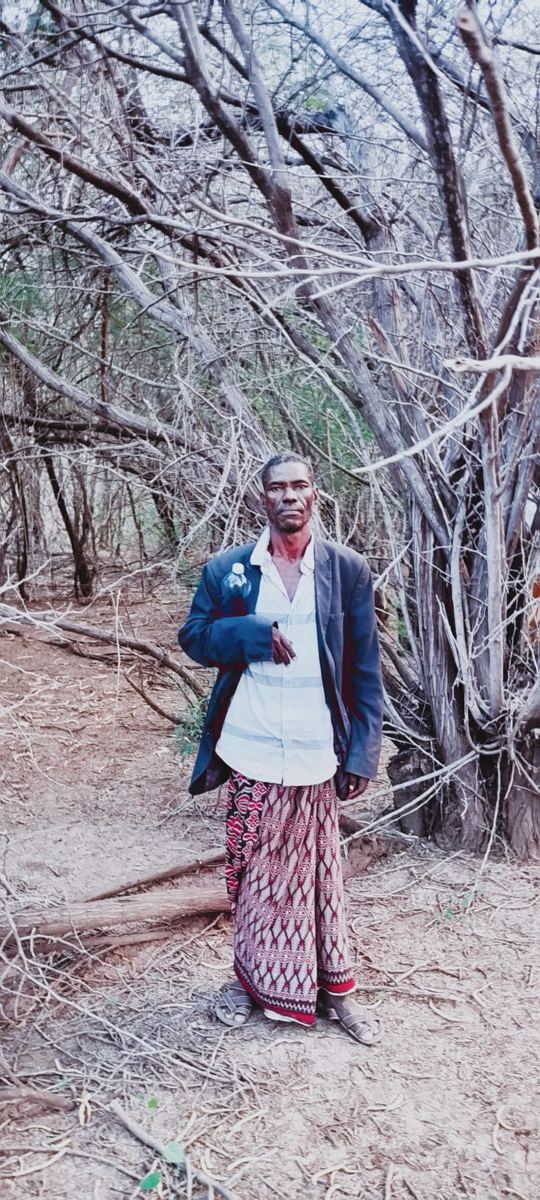
Before clearing
Homes hemmed in by thorns
In parts of Garissa, Prosopis grows taller than a person and thick enough to swallow footpaths, grazing land and the space around homesteads. This is what clearing crews walk into.
Garissa County, Kenya · Conservation is our priority
We are a community association clearing Prosopis juliflora ("Mathenge") from Garissa's grazing and farming land, paying local people for the work, and converting the cleared wood into charcoal briquettes for household use and local trade.

Members are vetted and bonded to uphold our constitution, the Forest Act and Kenya's charcoal regulations, with sign-off from the County Forest Office and Ecosystem Conservator.
Community crews remove Prosopis thickets, roots included, from priority grazing and farm plots.
Local people are paid a fee for clearing work, putting income directly into Garissa households.
Cleared biomass becomes charcoal briquettes, so no indigenous trees are cut for fuel.
Land goes back to pasture and cultivation, with access to water points opened up again.
The challenge
Prosopis juliflora was introduced to Kenya's arid and semi-arid lands decades ago to stabilise soils and provide fuelwood. In Garissa it has spread far beyond where it was planted, forming dense, thorny thickets along the Tana River and across rangeland.
Our model
Every hectare we clear restores land, creates paid local work, and produces a cleaner fuel that takes pressure off indigenous trees.
Removing Prosopis lets native grasses and trees recover and reduces the demand to cut indigenous species like acacia for charcoal.
Clearing is done by local residents for a fee. Members also earn from trading and transporting briquettes under licence.
Cleared wood is carbonised and compressed into briquettes that burn longer and more evenly, sold for household use and small-scale trade.
Stories from the ground
Photos and voices from our members and neighbours in Garissa County.
In his own words
[Add one line from his video, translated]
A community member speaks on site, among piles of cut Prosopis, about living with the thickets and the clearing work around his home. Filmed in October 2026.
In parts of Garissa, Prosopis grows taller than a person and thick enough to swallow footpaths, grazing land and the space around homesteads. This is what clearing crews walk into.
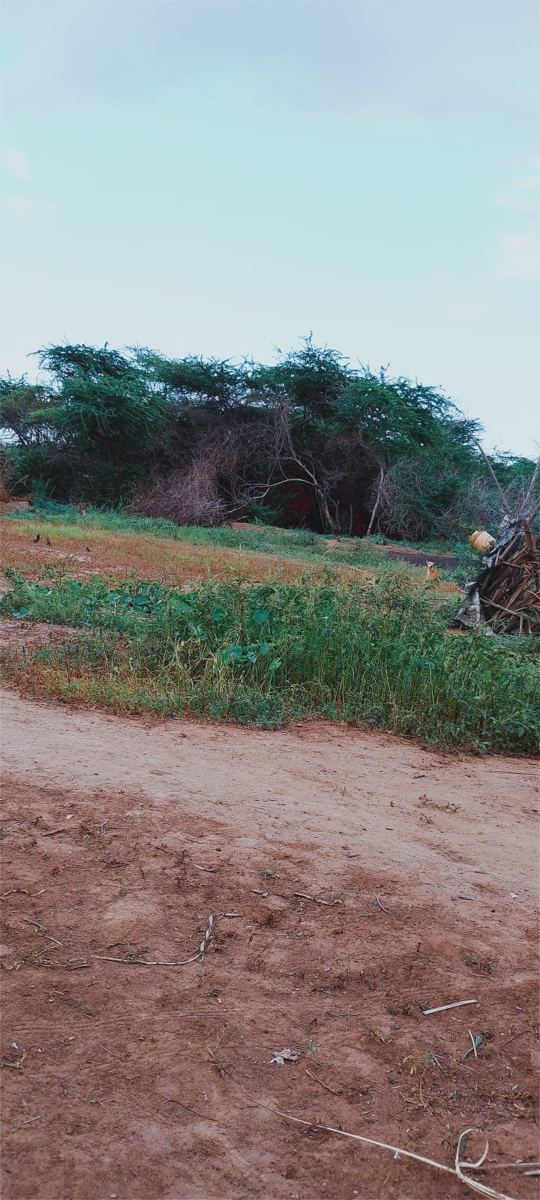
Once the thicket is pulled out, grass and crops have room to grow and paths to homes and water are open again. The tree line behind shows what used to stand here.
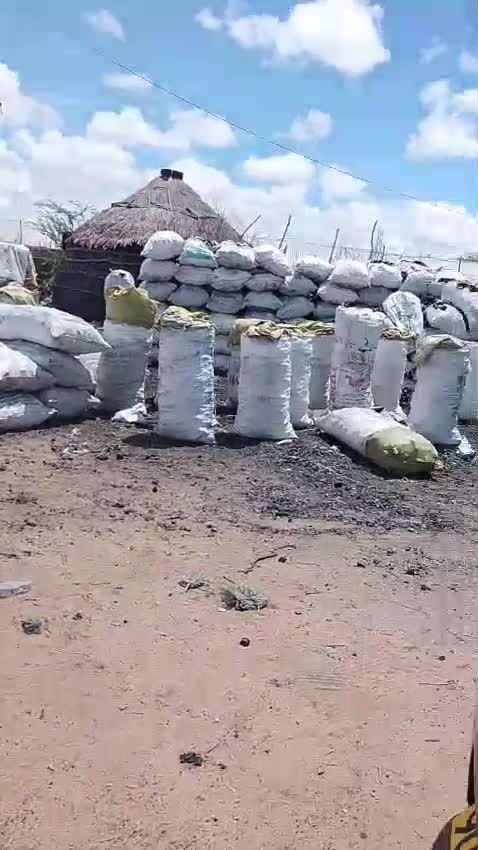
Cleared Prosopis wood is turned into charcoal and briquettes, then bagged for licensed transport and local sale. Households get fuel without cutting indigenous trees.
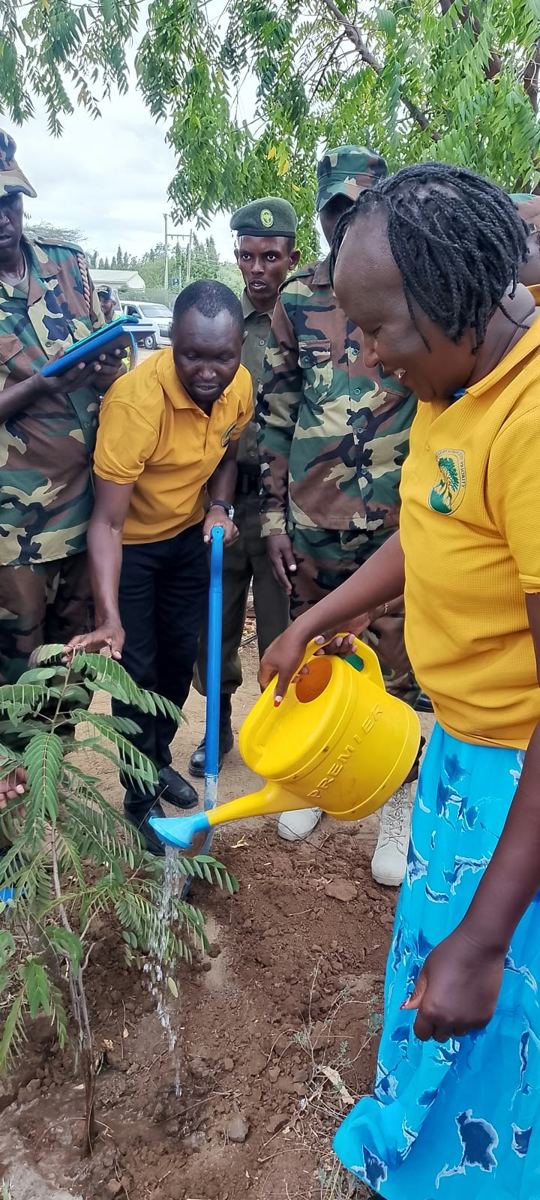
Our members joined the Ministry of Environment, Climate Change and Forestry, the County Government of Garissa and forest and wildlife rangers at the KWS grounds to plant trees.
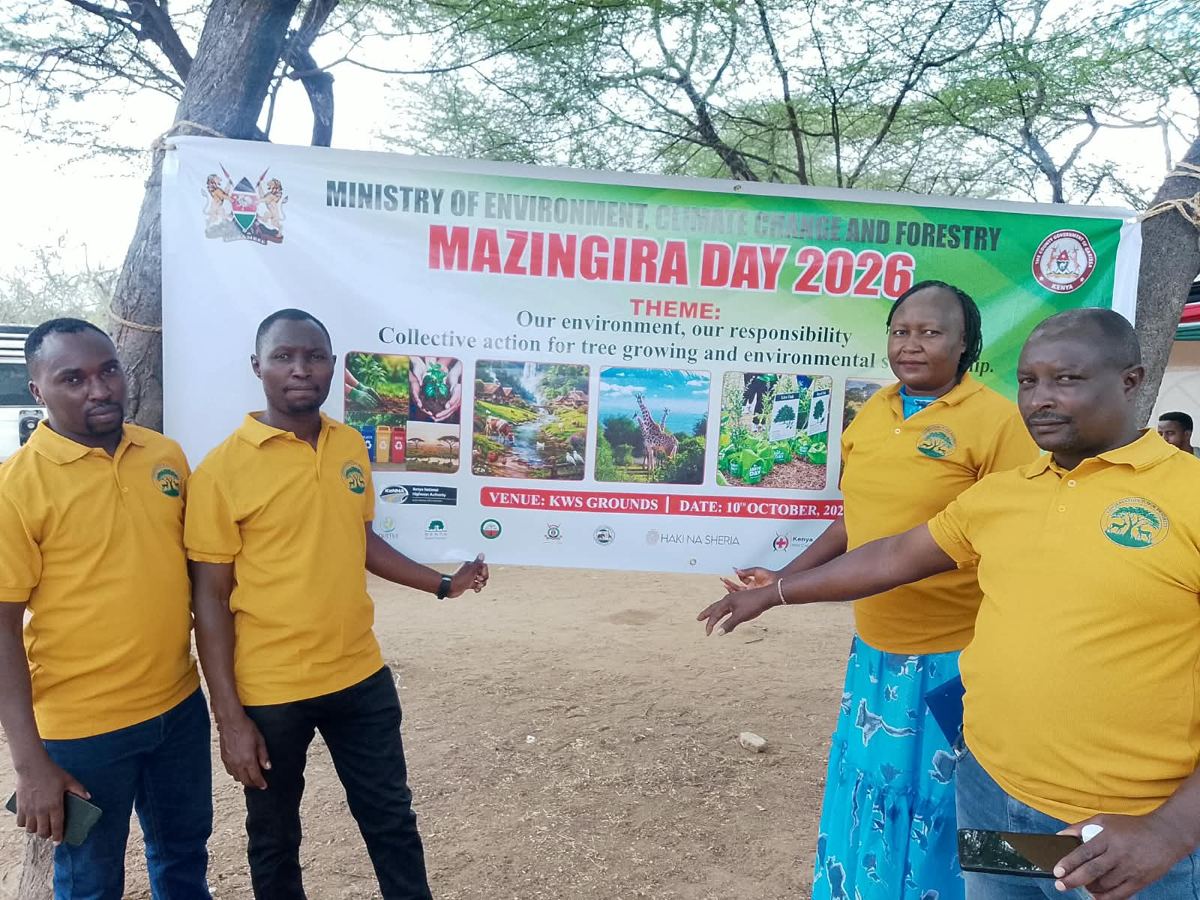
Under the day’s theme, “Our environment, our responsibility”, members in GAFOCTTA colours stood with partners for collective action on tree growing and environmental stewardship.
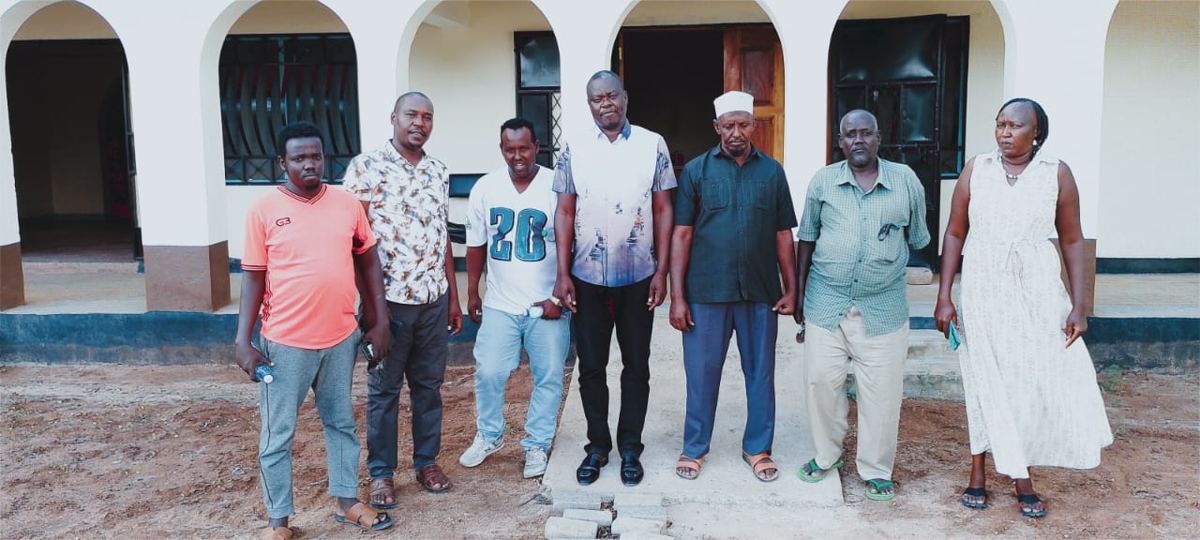
Members and local leaders come together to plan clearing sites, welcome and vet new members, and agree how the work is shared across the community.
Prosopis thorns cause deep, painful wounds that are slow to heal and often become badly infected, in children, herders and livestock.
Goats and cattle that feed heavily on the sugary pods suffer rotten teeth and blocked digestion, which can kill them.
Thickets near homes hide predators and snakes and block wildlife routes to water. Open land keeps people and wildlife apart.
Dense thickets choke river channels and drainage and push floodwater onto homes and farms. Cleared banks let the river follow its course.
For government agencies
Our work supports Kenya's land-restoration, climate-adaptation and livelihoods goals in the arid and semi-arid lands. We are looking to partner with agencies that fund or deliver this work in Garissa.
Clearing invasive species is a first step to restoring degraded rangeland and riparian land, in support of the national tree-growing and restoration agenda.
Community-run, ward-level projects that improve resilience to drought, suited to county climate change funding windows.
Members are vetted and bonded to the Forest Act and charcoal regulations, giving regulators a single, accountable point of contact.
Reclaimed pasture and fields support pastoralist livelihoods and food production along the Tana River belt.
Paid clearing work and briquette enterprises create income for young people and women in the county.
We welcome collaboration on Prosopis management, regrowth control and briquette quality.
Governance & accountability
We know partners need confidence before they commit. Here is how we hold ourselves to account.
Ways to support
Choose the option that fits your organisation. Every contribution is tied to a site and reported back to you.
Pays community crews to clear and uproot Prosopis on one hectare of grazing or farmland.
Kilns, a briquette press and tools for one community group, so clearing pays for itself over time.
Multi-ward clearing and restoration delivered through our members, with joint monitoring and reporting.
Indicative budget for 20 hectares. Equipment prices are based on 2025 Kenyan market listings and estimates; final costs will be confirmed with suppliers.
| Line item | Unit | Qty | Unit cost (KES) | Total (KES) |
|---|---|---|---|---|
| Community clearing fees | hectare | 20 | 1000000 | |
| Carbonisation kilns | kiln | 8 | 25000 | |
| Briquette presses | press | 2 | 230000 | |
| Tools & protective gear | kit | 40 | 5000 | |
| Transport to market | month | 12 | 50000 | |
| Training & monitoring | lump sum | 1 | 500000 | |
| Total funding need | ||||
Request our profile, budget and site plans, or arrange a field visit to see the work in person.
Contact